



HUBER BLOG
THE LATEST INSIGHTS
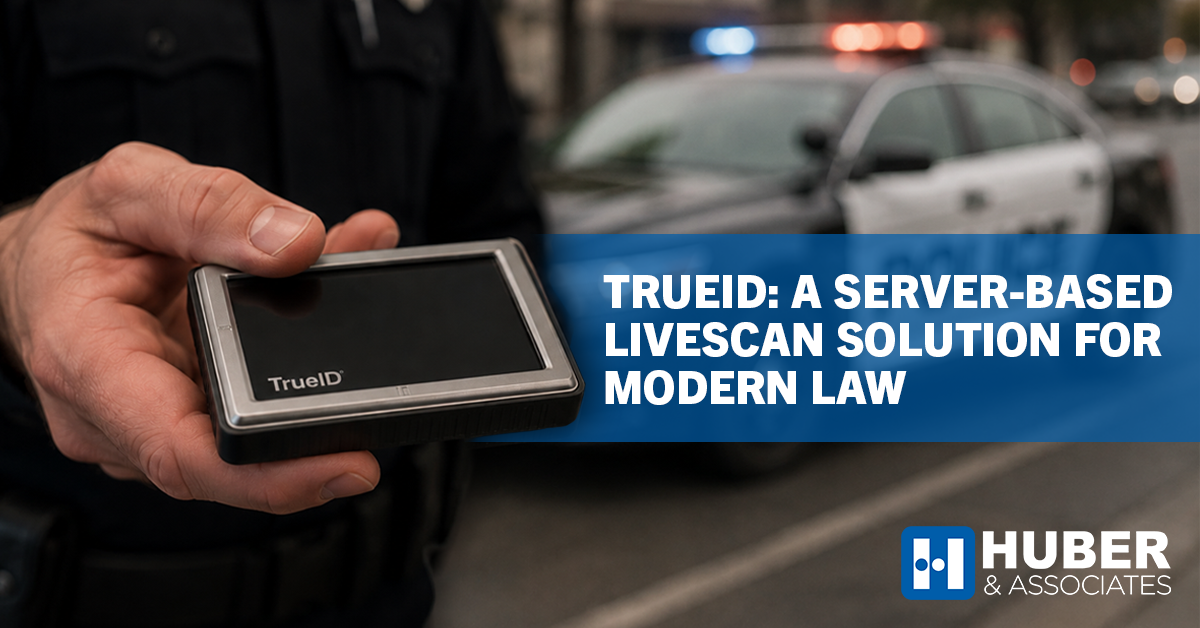
TrueID: A Server-Based LiveScan Solution for Modern Law Enforcement
The Limits of Traditional LiveScan Systems
For decades, LiveScan systems have followed the same model: a dedicated computer, a proprietary scanner, and a price tag that can reach $30,000 per unit. Because each system is self-contained, agencies can typically only afford to place a handful of them in fixed locations. That constraint shapes how identification actually happens in the field, and it creates friction in situations where speed matters most.
Where Limitations Become Most Costly
Consider a trooper working a rural stretch of highway, two hours from the nearest station. A traffic stop raises a concern. The name and information provided do not quite add up, but there is no hard evidence, only instinct built from experience. Under the traditional model, confirming identity means one of two choices: let the uncertainty go unresolved, or commit to a two-to-four-hour round trip to reach a LiveScan machine, wait for it to become available, and process the print. Either option carries a real cost, whether to public safety in the first case or to staffing and shift coverage in the second.
The same pressure shows up inside a jail during a high-volume booking period. A single fixed workstation becomes a bottleneck, and every additional person in the intake line adds to the wait. Death investigations present a similar challenge, since positive identification is required but transporting a body to a station for standard equipment is neither practical nor appropriate. Sex offender registration carries its own version of the problem, as a sheriff’s office is legally required to confirm that the person standing in front of them is the actual registrant, not someone standing in for them. In each case, the underlying question is the same: is this person who they claim to be, and can that be confirmed quickly enough to make serious, potentially legally-implicating, decisions?
How TrueID Closes the Gap
TrueID was built to close that gap. Because it is server-based rather than device-based, agencies are not purchasing a self-contained system for every location. A single fingerprint scanner, roughly the size of a cell phone, connects to any device with internet access, whether that is a mobile computer in a patrol car, a laptop, or an Android phone. An officer can walk a subject through a fingerprint scan from the back of a squad car, in a jail intake area, or at the scene of an investigation, and receive a response from the state repository in minutes rather than hours.
This approach also changes the cost conversation for agencies weighing whether to increase capacity. Because the platform is centrally managed, adding a scanner is significantly less expensive than purchasing an entire standalone unit, and the more devices an agency adds, the lower the cost per device becomes. That matters for a budget committee evaluating whether to expand identification capability at one substation or across an entire patrol district, since the math does not simply multiply with each additional unit.
Meeting Compliance and Integration Requirements
For records division commanders, jail administrators, and CJIS compliance officers, an important question often asked is about whether a new system introduces risk. TrueID is listed on the FBI Certified Products List, and its server-based architecture is designed to align with FBI CJIS Security Policy requirements, giving compliance officers a documented answer rather than an assumption. Agencies also retain control over how the platform is deployed, whether hosted on premises or delivered as a cloud-based service, which allows a department to fit TrueID into an existing IT environment rather than rebuild around it.
The result is a platform that can start small, at a single agency or a single unit, and scale without requiring a wholesale replacement of existing infrastructure. For law enforcement leaders building a case for command staff or a budget committee, that scalability, paired with FBI certification and CJIS-aligned architecture, offers a defensible path forward rather than a leap of faith.
TrueID Within Enterpol’s Public Safety Suite
TrueID is part of Enterpol’s broader suite of criminal justice information systems, which includes computer-aided dispatch, records management, and jail management platforms already in use by law enforcement agencies nationwide. For departments already running Enterpol CAD, RMS, or JMS, TrueID adds identification capability to a system their staff already knows, rather than introducing a separate platform to learn and maintain. Fingerprint submissions captured through TrueID feed into the state’s AFIS-driven criminal history system, connecting local identification work to the same central repository used at the state level.
Positive identification affects far more than administrative accuracy. It affects how quickly a law enforcement officer can clear a stop, how a jail manages an intake line, and how confidently a sheriff’s office can meet its legal obligations. TrueID was designed around those realities.
To see how TrueID could fit within your agency’s existing systems and workflows, request a demonstration with the Enterpol team at Huber & Associates.